
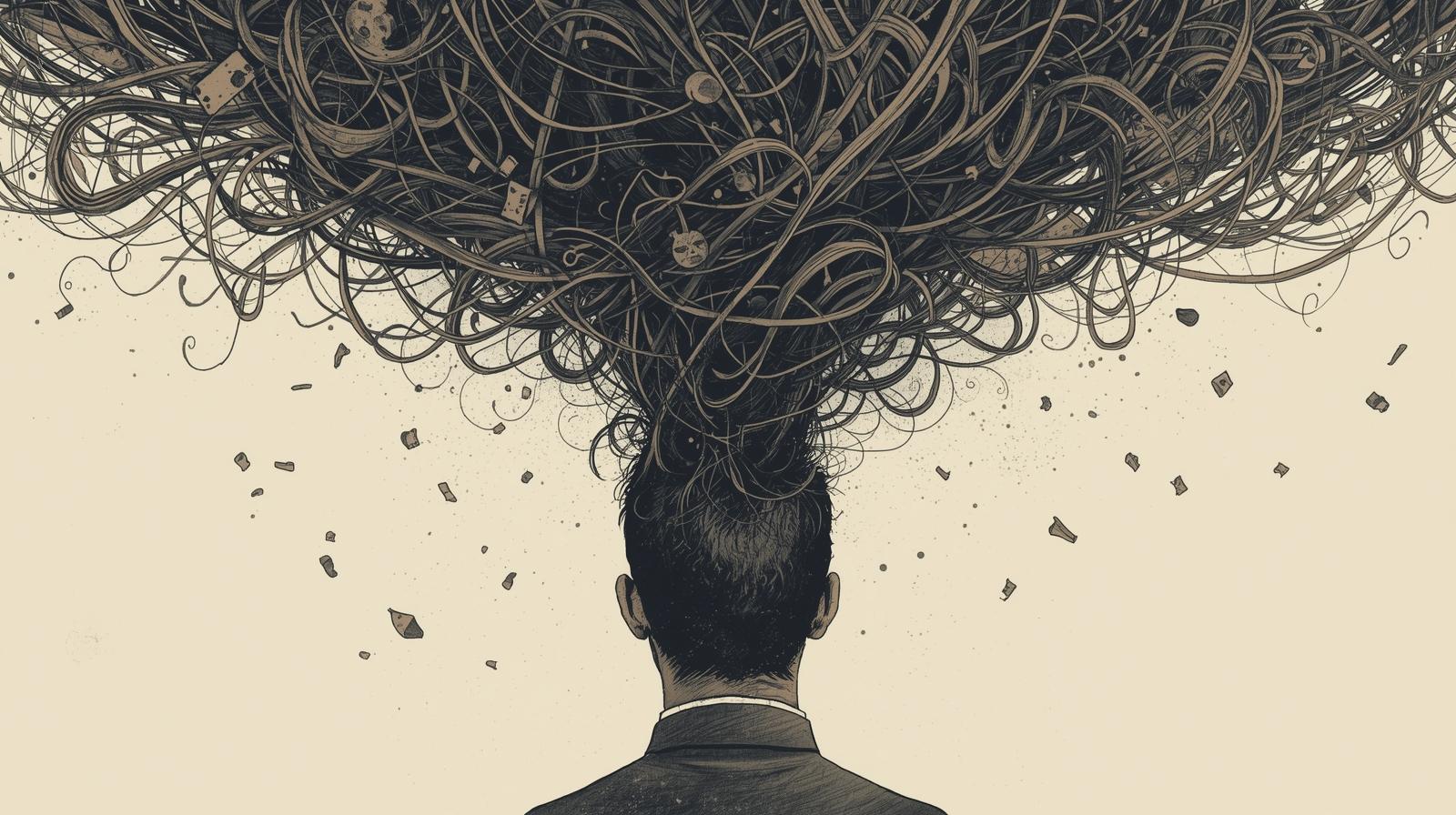
If your mind feels like it’s stuck on repeat, replaying the same worries, conversations, or fears no matter how tired you are of thinking about them, you’re not alone. Anxiety doesn’t always show up as panic or obvious fear. For many people, it takes the form of relentless mental noise. Looping thoughts. Obsessive analysis. Rumination that feels impossible to shut off. The harder you try to think your way out of it, the more trapped you feel inside your own mind. This isn’t because you’re overthinking on purpose or failing to control your thoughts. It’s because your brain has learned a pattern it believes is protective.
For people living with anxiety, the mind often becomes the battleground. Thoughts feel urgent, important, and demanding. Relief seems just one insight away, yet never arrives. Understanding why this happens is the first step toward real change.
When Thinking Stops Being Helpful
Thinking itself is not the problem. Thinking helps us plan, learn, reflect, and solve problems. The problem begins when thinking loses its endpoint.
Rumination is thinking without resolution. The same questions repeat with no new information. The same scenarios replay without relief. Obsessive thoughts fixate on meaning, danger, or mistakes long after the moment has passed. The mind circles endlessly, searching for certainty that never fully comes.
Common ruminating themes include:
• What if something goes wrong
• Why did I say that
• What if this feeling never ends
• What if this means something is wrong with me
• What if I lose control
These thoughts feel convincing because they are driven by anxiety, not logic. The mind is not trying to torture you. It is trying to protect you in the only way it currently knows how.
Anxiety and the Nervous System’s Role in Rumination
Anxiety is not simply a mental experience. It is a full-body state shaped by the nervous system.
When the nervous system perceives uncertainty or threat, it increases vigilance. One of its primary tools is thinking. If the brain can anticipate danger, analyze outcomes, or prevent mistakes, it believes it can keep you safe. Over time, this creates a learned association: thinking equals protection.
The problem arises when this system stays active even when no immediate danger exists. Thoughts become self-referential. The mind begins monitoring itself. Sensations are scrutinized. Emotions are questioned. This creates a feedback loop where awareness fuels anxiety and anxiety fuels more thinking.
This is why rumination often intensifies during quiet moments, at night, or when you finally try to relax. Stillness removes distraction, leaving the mind alone with the habit it has practiced the most.
How Looping Thoughts Can Escalate Into Panic
For some people, rumination remains mental. For others, it spills into the body and becomes panic.
Panic often starts with a thought:
“What if this feeling gets worse?”
“What if I can’t stop this?”
That thought triggers a physical response. Heart rate increases. Breathing changes. Sensations intensify. The brain notices the sensations and interprets them as danger. Fear escalates. Panic follows.
After a panic experience, the mind often becomes hyperfocused on preventing the next one. Thoughts loop around bodily sensations, triggers, and warning signs. The fear of panic becomes a powerful driver of obsessive thinking.
This is why panic, anxiety, rumination, and obsessive thoughts are deeply connected. They are different expressions of the same learned loop.
Why Reassurance and Logic Rarely Break the Cycle
People struggling with rumination often seek reassurance. They replay conversations, research symptoms, ask the same questions, or mentally argue with their thoughts. Reassurance may bring temporary relief, but it rarely lasts.
That’s because reassurance works at the conscious level, while rumination is maintained subconsciously. The brain has learned that constant thinking is necessary for safety. Until that belief changes, the mind will keep returning to the same loops.
This is also why telling yourself to “stop thinking” or “calm down” often backfires. Effort reinforces importance. Importance reinforces the loop.
Hypnosis and Hypnotherapy for Looping and Obsessive Thoughts
Hypnosis and hypnotherapy address anxiety at the level where rumination is learned and maintained.
Hypnosis is not about controlling thoughts or forcing the mind to be quiet. It is about changing the subconscious associations that link thinking with safety. In a hypnotic state, the nervous system becomes more receptive to new learning. The brain can experience stillness without danger.
Through hypnosis, the mind learns:
• Thoughts can arise without being followed
• Sensations can be noticed without alarm
• Awareness does not require analysis
• Presence is safe
This is the foundation of brain retraining and rewiring. The brain changes through experience, not explanation.
Brain Retraining and Rewiring the Loop
Brain retraining focuses on patterns rather than content. It recognizes that the problem is not what you think, but how your brain responds to thought.
When the brain repeatedly experiences safety without rumination, new pathways form. Old loops weaken because they are no longer reinforced. Over time, thinking loses its urgency. Thoughts pass more easily. Space returns.
This process does not require constant effort. In fact, trying too hard often strengthens the loop. Change happens when the brain realizes it no longer needs to stay alert to survive.
Hypnotherapy accelerates this process by creating the conditions for learning to happen more efficiently.
Being Present Without Forcing Calm
Many people believe being present means having no thoughts at all. This misunderstanding creates frustration and self-judgment.
Being present does not mean emptying the mind. It means relating to thoughts differently. Thoughts can exist without pulling you away. Awareness can be spacious rather than tight.
For people with anxiety, presence initially feels uncomfortable because the nervous system associates stillness with vulnerability. Hypnosis helps change this association. Presence becomes neutral, then grounding, then restorative.
Peace of mind is not the absence of thought. It is freedom from compulsion.
What Peace of Mind Actually Feels Like
Peace of mind is often described as calm, but many people with anxiety don’t trust calm. A more accurate description is steadiness.
Peace of mind feels like:
• Thoughts arise without demand
• Attention can rest without effort
• Sensations no longer signal danger
• The present moment feels sufficient
• The mind no longer needs to solve itself
This state is not perfect or permanent. Stress still occurs. Thoughts still appear. The difference is that the loop no longer takes over.
Anxiety Is Learned, Which Means It Can Change
One of the most painful beliefs anxiety creates is the belief that this is simply how your mind works. That belief itself is part of the loop.
The brain is plastic. Patterns formed through experience can be reshaped through new experience. Anxiety with rumination, obsessive thinking, and panic is not a life sentence. It is a conditioned response.
Through hypnosis, hypnotherapy, brain retraining, and subconscious rewiring, many people experience relief not because they fought their thoughts, but because the system no longer believed it needed to stay on high alert.
Peace of mind does not come from thinking harder. It emerges when the mind learns it is safe to rest.
And that is something that can change.
