
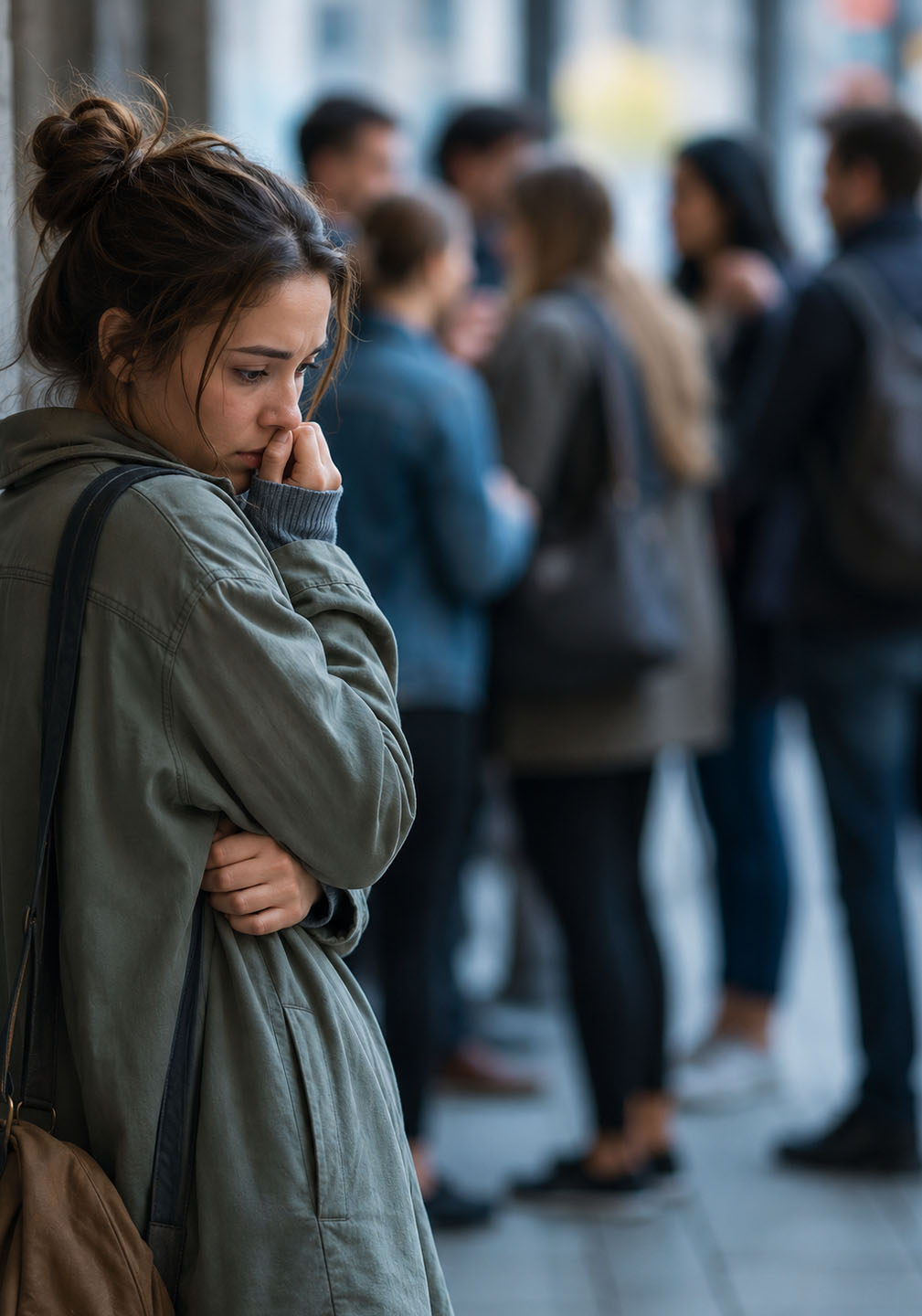
What Is Social Anxiety?
You’ve replayed that conversation a hundred times.
“Why did I say that?”
“Did they think I sounded stupid?”
“I shouldn’t have said anything.”
Before an important meeting, you rehearse every possible question. Before a networking event, you think about canceling. You walk into a restaurant wondering where you’ll sit, whether anyone is looking at you, and what happens if your face turns red. You avoid making phone calls, hesitate before introducing yourself, overthink text messages, and sometimes leave social situations convinced you’ve embarrassed yourself—even when everyone else has already forgotten the conversation.
Perhaps you’ve turned down promotions because they required presentations. Maybe you’ve avoided dating because the fear of rejection felt overwhelming. You might decline invitations from friends, dread holiday gatherings, or spend hours worrying about an upcoming interview. Some people experience panic attacks in restaurants, grocery stores, churches, weddings, or crowded events. Others gradually begin avoiding more and more places until their world becomes noticeably smaller. The common thread isn’t a lack of intelligence, personality, or ambition. It’s the exhausting fear of being judged, criticized, embarrassed, or negatively evaluated by other people.
If this sounds familiar, you’re far from alone. Millions of people struggle with social anxiety, yet many spend years believing they’re simply shy, awkward, introverted, or lacking confidence. In reality, social anxiety is a well-recognized pattern that affects people from every walk of life, including executives, entrepreneurs, physicians, attorneys, business owners, students, parents, and professionals whose careers require them to communicate, lead, and build relationships. Many become remarkably skilled at hiding their anxiety, leaving others completely unaware of the internal battle taking place.
Social anxiety is far more than shyness or simply feeling nervous around other people. Most individuals occasionally experience butterflies before giving a presentation, meeting someone new, or attending an unfamiliar event. Social anxiety goes much deeper. It is the persistent fear of being judged, criticized, embarrassed, rejected, or negatively evaluated by others. That fear can become so powerful that it begins influencing everyday decisions, relationships, and opportunities long before a social interaction ever takes place.
One of the most common misconceptions is that social anxiety affects only people who are naturally introverted. It does not. Introversion describes where someone tends to recharge emotionally. Social anxiety is driven by fear. An extroverted person may genuinely enjoy being around people while simultaneously worrying about saying the wrong thing, appearing nervous, or making a poor impression. Conversely, an introvert may prefer smaller gatherings simply because they find them more energizing, not because they fear being judged. Although the two can occur together, they are entirely different experiences.
Social anxiety also exists on a spectrum. Some people become anxious only during public speaking, job interviews, or networking events. Others experience anxiety during everyday situations such as making small talk, eating in restaurants, attending parties, making phone calls, introducing themselves, asking questions in meetings, or expressing an opinion in a group. Some worry that everyone is watching them. Others fear blushing, shaking, sweating, forgetting what they wanted to say, or having a panic attack in front of other people. The specific situations vary from person to person, but the underlying fear of negative evaluation remains remarkably consistent.
For many people, the anxiety begins long before the event itself. Days, or even weeks, before a social situation, they mentally rehearse conversations, anticipate worst-case scenarios, and imagine every possible mistake they might make. Afterward, the mind often refuses to let the experience go. Conversations are replayed repeatedly. Facial expressions are analyzed. Every sentence is scrutinized. A brief interaction that others barely remember can occupy someone’s thoughts for hours or even days. This tendency to overthink social interactions is one of the most exhausting aspects of social anxiety because the event continues long after it has ended.
Over time, many people begin changing their lives to avoid the anxiety altogether. Invitations are politely declined. Networking opportunities are skipped. Promotions requiring leadership or public speaking are passed over. Dating becomes increasingly difficult. Friendships slowly fade as social situations become easier to avoid than endure. Some individuals begin limiting where they go or what they do because they fear becoming anxious in public. Their world becomes progressively smaller, not because they lack ambition or desire for connection, but because avoidance temporarily reduces fear while quietly reinforcing it.
Social anxiety affects far more than social events. It can influence careers, relationships, education, business opportunities, leadership, and self-confidence. Entrepreneurs may avoid marketing themselves or recording videos. Physicians may hesitate before presenting at conferences. Attorneys may dread courtroom appearances despite years of experience. Executives may avoid networking or speaking during board meetings. Students may know the correct answer but remain silent in class. The ability is often present. The fear of being evaluated prevents that ability from being fully expressed.
The physical symptoms can be just as distressing as the emotional ones. A racing heart, blushing, sweating, trembling, muscle tension, nausea, dizziness, dry mouth, or a shaking voice are all common experiences. Ironically, many people begin fearing these physical reactions more than the social situation itself. They become trapped in a cycle of worrying that others will notice their anxiety, and that very fear often intensifies the symptoms they are trying so hard to hide.
Perhaps the most important thing to understand is that social anxiety is not a character flaw, a lack of confidence, or evidence of weakness. It is not something people simply overcome by “trying harder” or forcing themselves to be more outgoing. For many individuals, social anxiety develops gradually through repeated experiences that teach the brain to associate social situations with emotional danger. Those learned patterns can become so automatic that they begin influencing thoughts, emotions, physical reactions, and behavior before a person consciously realizes what is happening.
The encouraging news is that learned patterns are not necessarily permanent. Understanding how social anxiety develops, and why the brain continues responding as though ordinary social situations are threatening—is the first step toward changing those patterns. In the next section, we’ll explore the experiences and psychological processes that commonly contribute to the development of social anxiety and why some people remain vulnerable to it long after the original experiences have passed.
Why Do People Develop Social Anxiety?
No one is born worrying that everyone is watching them.
No one enters the world believing they’ll embarrass themselves every time they speak, ask a question, meet someone new, or walk into a crowded room. Yet for millions of people, these fears become an automatic part of daily life. Understanding how social anxiety develops is important because it helps explain something many people have wondered for years: “Why do I react this way when I know there’s no real danger?”
For most people, social anxiety develops gradually rather than appearing overnight. The brain is remarkably efficient at learning from emotionally painful experiences. Being bullied in school, laughed at during a presentation, rejected by peers, criticized by a parent or teacher, humiliated in front of classmates, or repeatedly feeling excluded can teach the brain that social situations are emotionally dangerous. Even experiences that seem relatively minor to one person may have a lasting impact on someone else, particularly if they occur during childhood or adolescence when beliefs about identity and self-worth are still developing.
The brain isn’t trying to make you anxious. It’s trying to keep you from experiencing the same emotional pain twice.
Imagine a child who raises her hand in class only to be laughed at when she gives the wrong answer. A teenager is mocked for the way he looks, speaks, or dresses. An employee is harshly criticized during a meeting. An entrepreneur gives a presentation that doesn’t go well and leaves feeling embarrassed. Most people recover from these experiences without developing social anxiety, but for others the brain begins creating a powerful association: being seen becomes linked with emotional pain. From that point forward, future social situations may trigger the same protective response, even when no actual threat exists.
Social anxiety rarely develops because someone is weak or lacks confidence. More often, it develops because the brain has learned to become exceptionally alert to anything that might lead to criticism, rejection, embarrassment, or humiliation. That heightened awareness may have served a protective purpose at one point in life, but over time it often begins creating problems of its own. Instead of simply noticing genuine threats, the mind starts anticipating them everywhere.
Temperament may also play a role. Some people naturally experience emotions more intensely or are more sensitive to social feedback than others. This doesn’t mean social anxiety is inevitable or that it is determined entirely by genetics. Rather, temperament may influence how strongly someone responds to life experiences. Two people can go through the same embarrassing event and react very differently depending on their personality, previous experiences, support system, and the meaning they attach to what happened.
Family environments can also shape social confidence in subtle ways. Children who grow up with constant criticism, unrealistic expectations, emotional unpredictability, or parents who themselves fear social situations may begin viewing the world as a place where mistakes are dangerous and approval must constantly be earned. Others may receive the message that being different, expressing opinions, or drawing attention to themselves is somehow unsafe. These lessons are rarely taught directly. More often, they are absorbed gradually through repeated experiences and observations.
One of the most frustrating aspects of social anxiety is that the original experience is often long gone, but the emotional response remains. Someone who was bullied in middle school may still feel anxious speaking during meetings twenty years later. A person embarrassed during one presentation may continue fearing public speaking despite decades of professional success. The subconscious mind isn’t measuring whether today’s situation is objectively dangerous. It is responding to what it learned from yesterday’s experiences.
This is one reason social anxiety can feel so confusing. People often tell themselves, “I know this shouldn’t bother me,” or “I know no one is judging me,” yet their body reacts as though the danger is real. Their heart races. Their muscles tense. Their thoughts become scattered. Logic and emotion seem to be having two completely different conversations. Understanding that these reactions are learned protective patterns—not evidence that something is wrong with you—can be an important first step toward changing them.
The experiences that contribute to social anxiety are only part of the story. Equally important are the automatic thoughts that begin running through the mind long before anyone else notices a problem. Those silent conversations often determine whether someone walks confidently into a room or spends the evening worrying about what everyone else might be thinking.
The Thoughts No One Else Can Hear
If someone could hear the thoughts running through the mind of a person with social anxiety, they would often discover that the greatest struggle isn’t happening in the conversation itself—it’s happening internally. Long before a word is spoken, the mind may already be predicting rejection, criticism, embarrassment, or failure. These automatic thoughts are so fast and so familiar that many people assume they represent reality rather than learned patterns of thinking.
One of the hallmarks of social anxiety disorder is the tendency to overestimate social threats while underestimating one’s ability to cope with them. A person may walk into a meeting and immediately think, “Everyone will notice I’m nervous.” They may hesitate to ask a question because they assume, “They’re going to think it’s a stupid question.” Someone attending a networking event may convince themselves they have nothing interesting to say, while another person worries that one awkward pause will ruin the entire conversation. These thoughts feel convincing because they occur automatically, not because they are necessarily accurate.
One of the most common thinking patterns is known as mind reading. Despite having no direct evidence, people begin assuming they know exactly what everyone else is thinking. A coworker who appears distracted must be judging them. A friend who takes several hours to reply to a text message must be upset with them. Someone who doesn’t smile immediately must dislike them. The mind quietly fills in missing information, and almost always assumes the worst.
Another common pattern is catastrophizing. A minor social mistake becomes a major disaster. Forgetting someone’s name, stumbling over a sentence, knocking over a glass of water, or briefly losing a train of thought suddenly feels unforgettable. The person imagines everyone will remember the moment forever, when in reality most people either never noticed or forgot about it within minutes. Social anxiety magnifies ordinary human imperfections until they seem enormous.
Negative self-talk also plays a powerful role. Many people with social anxiety carry an ongoing internal dialogue that is far harsher than anything another person would ever say to them. “I’m awkward.” “I’m boring.” “Everyone else is more confident than I am.” “I always say the wrong thing.” Over time, these thoughts stop feeling like opinions and begin feeling like facts. The more frequently they are repeated, the more automatic they become, quietly shaping confidence, behavior, and expectations in future social situations.
Perfectionism often intensifies social anxiety. Some people believe every conversation must be interesting, every presentation flawless, every answer intelligent, and every interaction free from mistakes. Ordinary pauses, forgotten words, or moments of uncertainty become unacceptable. Ironically, striving to appear perfect often makes people feel even more self-conscious because they are constantly monitoring themselves instead of participating naturally in the conversation.
Another important pattern is anticipatory anxiety. Instead of responding to the present moment, the mind begins rehearsing future problems. Days before a presentation, interview, first date, family gathering, or business meeting, someone with social anxiety may mentally practice dozens of conversations, imagine difficult questions, or picture embarrassing situations that never actually occur. By the time the event arrives, they may already feel emotionally exhausted from fighting imaginary battles.
Many people also become hyperaware of themselves rather than the people around them. Instead of listening naturally, they constantly monitor their posture, facial expressions, eye contact, voice, breathing, hands, or whether they appear nervous. Every sensation becomes evidence that something is wrong. A slight blush feels obvious. A racing heart feels impossible to hide. A brief hesitation while speaking seems catastrophic. This intense self-monitoring often increases anxiety because attention is focused inward rather than on the conversation itself.
Perhaps the most exhausting habit of all is overthinking. Long after the conversation has ended, the mind continues replaying it in remarkable detail. Why did I say that? Why didn’t I say this instead? Did I talk too much? Did they notice I was anxious? Hours later—or even days later—the conversation is still happening internally. Meanwhile, the other person has almost certainly moved on with their own life. This tendency to replay conversations, second-guess interactions, and mentally relive social situations is one of the defining features of social anxiety and often keeps the cycle going long after the event itself has ended.
These thinking patterns are not signs of weakness or evidence that someone lacks intelligence. They are learned mental habits that developed over time and became automatic through repetition. The encouraging news is that patterns can change. Before they do, however, it’s important to understand another force that quietly reinforces social anxiety in countless people: the powerful need for approval and the fear of disappointing others.
Why You Replay Conversations for Hours
The conversation ended hours ago.
The other person has probably gone home, eaten dinner, watched television, and gone to bed.
You’re still thinking about what you said.
“Why did I tell that story?”
“I talked too much.”
“They probably think I’m weird.”
“I should have said something different.”
“I can’t believe I actually said that.”
For many people with social anxiety, the conversation doesn’t end when they walk away. It continues in their minds for hours, days, or sometimes even years. They replay every sentence, every facial expression, every pause, and every perceived mistake, searching for evidence that they embarrassed themselves or made a poor impression. Meanwhile, the other person has often forgotten the conversation entirely.
This pattern is known as rumination, and it is one of the most exhausting features of social anxiety disorder. Unlike healthy reflection, which helps people learn from experience and move forward, rumination keeps the mind trapped in an endless loop of self-evaluation. Instead of asking, “What can I learn from this?” the mind repeatedly asks, “What is wrong with me?”
Many people assume everyone else remembers their mistakes as vividly as they do. In reality, most people are far more focused on themselves than on anyone else’s minor social missteps. The awkward pause that feels unforgettable to you may never have registered with the other person. The sentence you wish you could take back was likely forgotten within minutes. Social anxiety creates what psychologists sometimes call the spotlight effect—the tendency to overestimate how much other people notice and remember our behavior.
Rumination isn’t limited to face-to-face conversations. Many people spend several minutes rewriting a simple text message before sending it, wondering whether it sounds too formal, too casual, too enthusiastic, or too short. After pressing “send,” they continue analyzing it anyway. Others reread emails repeatedly before sending them, convinced a small mistake could damage their reputation. Social media often creates another layer of anxiety. A person may spend an hour writing a post, delete it several times, finally publish it, and then repeatedly check for reactions while worrying that people are judging what they wrote.
Workplace interactions frequently become another source of overthinking. Someone leaves a meeting convinced they sounded unintelligent because they stumbled over one sentence. An employee replays a conversation with a supervisor all evening, searching for signs that they said something wrong. An entrepreneur worries that a potential client interpreted an email negatively. A physician continues thinking about a brief interaction with a patient’s family. An attorney replays a courtroom presentation, focusing entirely on one small mistake while overlooking everything that went well. The specific situations change, but the pattern remains remarkably consistent.
One reason this happens is that the brain treats emotionally significant experiences differently from ordinary ones. When a conversation feels threatening because of the possibility of rejection, criticism, or embarrassment, the mind naturally pays closer attention to it. Unfortunately, social anxiety causes the brain to label far too many ordinary conversations as emotionally significant. Instead of filing them away as routine interactions, it continues reviewing them in an attempt to prevent future embarrassment. The intention is protection. The result is exhaustion.
Rumination also creates a powerful illusion: the belief that if you think about the conversation long enough, you’ll eventually find the perfect answer or prevent the same thing from happening again. Unfortunately, the opposite usually occurs. The more the mind reviews the interaction, the more uncertain it becomes. New doubts appear. Alternative responses seem better than the ones you actually gave. Confidence decreases instead of increasing. Rather than producing clarity, overthinking often magnifies uncertainty.
Perhaps the most important thing to understand is that replaying conversations rarely reflects reality. It reflects anxiety. The internal version of the conversation is filtered through fear of judgment, rejection, criticism, and embarrassment. That filter exaggerates mistakes while ignoring everything that went well. It quietly convinces people they are being evaluated far more harshly than they actually are.
The habit of replaying conversations is closely connected to another fear that lies at the heart of social anxiety: the fear that other people are constantly judging, criticizing, rejecting, or evaluating us. Understanding that fear helps explain why ordinary social interactions can feel so emotionally overwhelming, even when there is little objective reason for concern.
Fear of Rejection, Judgment, Criticism, and Embarrassment
At its core, social anxiety is rarely about people. More often, it is about what we imagine people are thinking about us.
Most people with social anxiety aren’t afraid of conversations. They aren’t afraid of restaurants, meetings, parties, presentations, or networking events. They are afraid of being judged while they’re there. Beneath nearly every symptom of social anxiety disorder lies the same question:
“What if they don’t like me?”
“What if I embarrass myself?”
“What if they think I’m incompetent?”
“What if everyone notices how nervous I am?”
The mind becomes so focused on preventing rejection, criticism, or embarrassment that ordinary social interactions begin feeling like high-stakes performances. Every conversation feels like an evaluation. Every meeting feels like a test. Every first impression feels permanent. Instead of simply participating in life, people with social anxiety often feel as though they are constantly being observed, evaluated, and graded by everyone around them.
One of the greatest ironies is that most people are not paying nearly as much attention as someone with social anxiety imagines. The coworker who seemed distracted may have been thinking about an upcoming deadline. The person who didn’t smile immediately may have been preoccupied with a family problem. The friend who took several hours to respond to a text message may simply have been busy. Yet social anxiety often fills in the missing information with the most negative explanation possible, quietly assuming that every ambiguous situation reflects personal rejection.
This fear of judgment affects decisions people make every single day. Someone chooses not to ask a question during a meeting because they worry it will sound unintelligent. A college student knows the answer but never raises a hand. An entrepreneur delays posting videos online because strangers might leave critical comments. A talented employee avoids applying for a promotion because they fear they won’t measure up. Someone remains silent during a conversation even when they have something meaningful to contribute because speaking feels riskier than remaining invisible.
The fear of rejection also changes relationships. A person may avoid asking someone on a date because hearing “no” feels unbearable. They hesitate to express affection because they fear vulnerability. They struggle to voice disappointment, establish boundaries, or communicate honestly because they worry conflict will damage the relationship. Rather than risking temporary discomfort, they often suppress their own needs, unintentionally creating distance instead of connection.
For many people, criticism feels far more significant than it objectively is. A single negative comment can outweigh dozens of compliments. Positive feedback is dismissed as people “just being nice,” while criticism is accepted as undeniable proof of personal inadequacy. This mental filter causes the brain to place disproportionate importance on negative experiences, reinforcing the belief that social situations are dangerous and that mistakes carry far greater consequences than they actually do.
Embarrassment is another powerful driver of social anxiety. Most people experience embarrassing moments from time to time, laugh about them, and move on. Someone with social anxiety often expects embarrassment to permanently change the way others see them. They imagine that one awkward pause, one forgotten name, one stumble over a sentence, or one visible sign of nervousness will define how people remember them forever. In reality, most people quickly forget these moments because they are far more occupied with their own lives than someone else’s minor social mistakes.
Modern life has expanded these fears in ways previous generations never experienced. Posting on social media, recording videos, participating in Zoom meetings, speaking during virtual conferences, or building a professional presence on LinkedIn can all trigger the same fear of being judged. For entrepreneurs and business owners, this can become especially costly. The fear of criticism may prevent them from marketing their services. The fear of negative comments may stop them from creating videos or sharing expertise online. Opportunities for growth are postponed not because they lack knowledge, but because visibility itself feels emotionally threatening.
Over time, many people begin making an important but costly decision without realizing it. They decide that remaining unnoticed is safer than risking judgment. They stop volunteering ideas. They stop introducing themselves. They stop asking questions. They stop pursuing leadership positions. They gradually become smaller, not because they lack talent, intelligence, or ambition, but because avoiding criticism begins to feel more important than pursuing opportunity.
The encouraging news is that these fears are not permanent parts of your personality. They are learned patterns shaped by previous experiences, repeated thoughts, and emotional conditioning. What has been learned can also be relearned. Before that process begins, however, it’s important to understand how these fears can sometimes become so intense that they trigger one of anxiety’s most frightening experiences: a panic attack in the middle of an ordinary social situation.
Panic Attacks in Social Situations
For many people, social anxiety eventually becomes about far more than worrying what other people think. The fear grows until ordinary social situations begin feeling emotionally and physically overwhelming. What once caused nervousness before a meeting or a dinner with friends can gradually become intense enough to trigger a panic attack.
Panic attacks often seem to appear without warning, but they rarely develop without a history. Someone who has spent years fearing judgment, criticism, embarrassment, or rejection has often been living with a nervous system that remains on constant alert. Eventually, the stress response may become so sensitive that a crowded restaurant, business meeting, grocery store, church service, wedding, airport, waiting room, or family gathering is enough to activate the body’s fight-or-flight response, even though no true danger exists.
The physical symptoms can be frightening. A racing heart, trembling, dizziness, sweating, nausea, shortness of breath, chest tightness, a feeling of unreality, or the sensation that something terrible is about to happen often arrive within minutes. During the experience, many people become convinced they are having a medical emergency or losing control. Yet for individuals whose panic attacks occur in social situations, the greatest fear is frequently not the symptoms themselves. It is the possibility that someone else will notice them.
This fear often changes the way people experience everyday life. Dinner with friends becomes an exercise in locating the nearest exit. A meeting begins with identifying the quickest way to leave the room. A wedding, conference, or church service suddenly feels less like a celebration and more like a place where escape might be difficult if anxiety becomes overwhelming. Instead of focusing on the people around them, attention shifts inward as they closely monitor every heartbeat, every breath, every sensation, wondering whether another panic attack is beginning.
Ironically, this constant self-monitoring often intensifies anxiety rather than preventing it. The more attention people give to ordinary physical sensations, the more significant those sensations begin to feel. A slightly faster heartbeat becomes evidence that panic is returning. Feeling warm suddenly feels alarming. A brief wave of dizziness is interpreted as proof that something is seriously wrong. The body is reacting normally to stress, but the mind interprets those sensations as signs of danger, creating a cycle that can rapidly escalate into a full panic attack.
Over time, many people begin avoiding the places where panic attacks have occurred. Restaurants are replaced with takeout. Busy grocery stores become late-night shopping trips. Invitations are declined. Conferences are skipped. Business lunches disappear from the calendar. Vacations become more difficult to plan. Life slowly begins revolving around one goal: preventing another panic attack. Unfortunately, every avoided situation teaches the brain the same lesson—that the situation truly was dangerous—making the fear even stronger the next time.
Although panic attacks can feel terrifying, they are not dangerous in themselves. The symptoms reflect the body’s normal stress response becoming activated at the wrong time, not evidence that someone is losing control or “going crazy.” However, anyone experiencing panic symptoms for the first time, or symptoms that are severe, unusual, or concerning, should be evaluated by a qualified healthcare professional to rule out possible medical causes.
For some people, repeated avoidance gradually expands beyond one or two locations until entire categories of places begin feeling unsafe. Understanding how avoidance quietly grows over time—and how it can eventually overlap with agoraphobia—is one of the most important steps in understanding why social anxiety can become so life-limiting.
When Social Anxiety Affects Your Career
For many people, the greatest cost of social anxiety isn’t what happens at a party or family gathering. It’s what never happens in their career.
Promotions are postponed. Business opportunities are missed. Ideas remain unspoken. Talented professionals stay in the background while colleagues with greater confidence—but not necessarily greater ability—move into leadership positions. Over time, social anxiety can quietly influence an entire career, not because someone lacks intelligence or expertise, but because the fear of being evaluated begins shaping important decisions.
One of the first places this often appears is during the job interview. An interview is, by its very nature, a social evaluation. Someone with social anxiety may prepare extensively, know the material, and possess all the qualifications necessary for the position, yet still struggle to communicate confidently under pressure. Their mind races, they begin second-guessing every answer, and afterward they replay the interview repeatedly, focusing almost entirely on what they believe they did wrong rather than what they did well.
The same pattern often continues after they are hired. Meetings become stressful because speaking up feels risky. Many employees remain silent despite having valuable ideas, asking themselves whether their question sounds intelligent enough or whether someone else has already thought of a better solution. Others avoid disagreeing with coworkers or supervisors because conflict feels emotionally threatening. Remaining quiet may reduce anxiety in the moment, but it also limits opportunities to demonstrate knowledge, leadership, and initiative.
For professionals whose careers depend on visibility, communication, or influence, the impact can be even greater. Physicians may hesitate before presenting at conferences. Attorneys may experience significant anxiety before speaking in court. Sales professionals may struggle with networking events. Entrepreneurs may avoid marketing themselves, recording videos, speaking on podcasts, or attending industry conferences. Business owners sometimes spend years perfecting their products or services while avoiding the very visibility needed for those businesses to grow.
Modern technology has introduced new challenges as well. Virtual meetings, webinars, video interviews, online presentations, and social media have created additional situations where people feel they are being observed and evaluated. Some experience intense camera anxiety during Zoom or Microsoft Teams meetings. Others repeatedly record and delete videos because they believe they don’t sound confident enough. Many professionals delay posting on LinkedIn or sharing their expertise online because they worry about criticism, negative comments, or appearing inexperienced. These fears can quietly limit career growth in a world where professional visibility has become increasingly important.
Leadership presents another challenge. Many people assume leaders are naturally confident, but confidence and leadership are not always the same thing. Some highly capable professionals avoid management positions because they fear supervising others, giving constructive feedback, leading meetings, making difficult decisions, or speaking in front of groups. They aren’t avoiding responsibility because they lack ability. They are avoiding the possibility of criticism, conflict, or making mistakes where others can see them.
Social anxiety also affects the conversations that often determine professional success. Negotiating a salary, requesting a promotion, setting boundaries with clients, declining unreasonable requests, providing constructive feedback, or discussing workplace problems all require the willingness to tolerate temporary discomfort. For someone who fears disappointing others or being viewed negatively, these conversations can feel overwhelming. As a result, they may accept less than they deserve, work longer hours than they should, or remain in situations that no longer support their personal or professional growth.
Perhaps the greatest tragedy is that social anxiety often hides exceptional talent. Some of the most thoughtful, creative, compassionate, and intelligent people never receive the recognition they deserve because fear repeatedly convinces them to remain invisible. Their ideas are left unspoken. Their businesses remain smaller than they could become. Their expertise reaches fewer people than it might have otherwise. The limitation is rarely intelligence or potential. It is the belief that being seen is more dangerous than staying hidden.
The encouraging news is that these patterns are not permanent. Confidence in the workplace does not come from eliminating every anxious thought. It develops as people gradually stop allowing fear of judgment to make important decisions on their behalf. As that happens, many discover that the opportunities they once believed belonged only to more confident people were available to them all along.
Work is only one area where social anxiety can quietly limit a person’s life. The same fears that make it difficult to speak during meetings or network professionally can also influence dating, close relationships, and the ability to form deep, meaningful connections with other people.
When Social Anxiety Affects Relationships
Social anxiety doesn’t simply make it harder to meet people. It often makes it harder to let people truly know you.
Human relationships are built on openness, vulnerability, honesty, and shared experiences. Social anxiety quietly interferes with each of those. It encourages people to hide parts of themselves, carefully monitor everything they say, and constantly wonder whether they are making a good impression. Instead of enjoying the moment, they become preoccupied with avoiding mistakes, saying the “right” thing, and preventing rejection. As a result, many relationships never have the opportunity to develop beyond the surface.
Dating is often one of the first places these fears become obvious. Meeting someone new naturally involves uncertainty, but for someone with social anxiety, that uncertainty can feel overwhelming. A simple first date may trigger days of anticipation beforehand and hours of overthinking afterward. Conversations are mentally rehearsed. Text messages are written, deleted, and rewritten. Every pause during the date is analyzed. If the other person doesn’t respond immediately after the date, the mind often assumes the worst long before there is any real evidence that something is wrong.
Modern dating has introduced new challenges as well. Dating apps have created opportunities to meet more people than ever before, but they have also increased opportunities for self-doubt. Someone may spend an hour deciding which message to send, worry excessively about how long to wait before responding, or interpret a delayed reply as rejection. Experiences such as ghosting can reinforce existing fears, making future relationships feel even more emotionally risky.
For many people, the fear of rejection becomes so uncomfortable that they stop taking chances altogether. They hesitate to ask someone out, delay expressing romantic interest, or remain in relationships that no longer meet their needs because ending the relationship feels less frightening than facing the uncertainty of starting over. Others convince themselves they need to become more attractive, more successful, more confident, or somehow “good enough” before they deserve to pursue a meaningful relationship. Unfortunately, waiting until you feel completely confident often means waiting indefinitely.
Social anxiety also affects established relationships. Expressing disappointment, discussing problems, asking for reassurance, or communicating personal needs can feel surprisingly difficult when someone fears conflict or disapproval. Instead of having honest conversations, many people remain silent in an effort to keep the peace. While this may reduce anxiety temporarily, it often creates misunderstandings, resentment, and emotional distance over time. Healthy relationships are strengthened through honest communication, not through the absence of disagreement.
Many people with social anxiety struggle to believe they are truly accepted. Compliments are dismissed. Expressions of love are questioned. Acts of kindness are explained away as politeness rather than genuine affection. At the same time, a single criticism or misunderstanding may receive far more attention than years of acceptance and support. This imbalance can make it difficult to fully trust even healthy relationships because the mind remains alert for signs that rejection is just around the corner.
Social anxiety can also affect physical intimacy. When someone is constantly monitoring how they look, sound, or perform, it becomes difficult to remain fully present with another person. Self-consciousness competes with connection. Thoughts such as, “Am I saying the right thing?” or “What if they lose interest?” create mental distance during moments that depend upon emotional closeness. For some individuals, this anxiety may also contribute to sexual performance anxiety, making it even harder to relax and enjoy intimacy. Because concerns about sexual functioning can sometimes have medical causes, persistent symptoms should be evaluated by a qualified healthcare professional rather than automatically assuming anxiety is the only explanation.
Perhaps the greatest loss created by social anxiety is not the relationships that end, but the relationships that never begin. Friendships are never pursued. Invitations are declined. Conversations never happen. Potential partners remain strangers because fear repeatedly whispers that rejection is more likely than acceptance. Yet most meaningful relationships begin exactly the same way—with one conversation, one shared experience, and one person willing to risk being genuinely seen.
The same fear that makes relationships difficult can also make it surprisingly challenging to build and maintain friendships. For many adults, loneliness isn’t the result of having nothing to offer other people. It’s the result of allowing anxiety to repeatedly choose isolation over connection.
Why Social Anxiety Makes It Difficult to Build Friendships
One of the most painful consequences of social anxiety is loneliness.
Not because people with social anxiety don’t want friends, but because building and maintaining friendships often requires repeatedly doing the very things they fear most. It means introducing yourself to someone you don’t know. Starting conversations without knowing how they’ll end. Inviting someone to lunch or coffee without knowing whether they’ll accept. Reaching out after months of silence and wondering whether they’ll even remember you. Every one of these situations carries the possibility of rejection, and for someone with social anxiety, that possibility can feel far more significant than it does for most people.
Making friends as an adult is already more challenging than it was during childhood or college. Daily life becomes busier. Careers, marriages, children, and family responsibilities leave less time for socializing. Opportunities to naturally meet new people become less frequent. Even individuals without social anxiety often find themselves wishing they had more meaningful friendships. When social anxiety is added to the equation, those challenges become even greater.
Many people with social anxiety assume everyone else already has an established circle of friends and isn’t interested in meeting anyone new. They hesitate to introduce themselves at community events, avoid conversations before meetings begin, or leave immediately after church services, fitness classes, volunteer activities, or professional organizations. The desire for friendship is often there, but the fear of rejection quietly convinces them that reaching out is too risky.
Social anxiety can also interfere with maintaining existing friendships. Someone may decline invitations because they feel anxious or emotionally exhausted, fully intending to accept the next invitation instead. Unfortunately, repeated cancellations sometimes lead friends to assume they aren’t interested in spending time together. Others stop initiating contact because they worry they are bothering people or fear their invitation will be declined. Over time, friendships may gradually fade, not because either person wanted them to end, but because anxiety repeatedly interrupted opportunities to stay connected.
Technology has created new ways to communicate, but it has also introduced new opportunities for self-doubt. Some people spend twenty minutes composing a simple text message before sending it. Others hesitate to call a friend because they worry they might be interrupting. A message that goes unanswered for several hours is interpreted as rejection rather than the far more likely explanation that the other person is simply busy. Social anxiety often encourages people to fill in the missing pieces of the story with the most negative explanation possible.
Many adults who struggle with social anxiety become trapped in an unfortunate cycle. They feel lonely and want deeper connections, but loneliness increases self-consciousness, making social situations feel even more intimidating. The longer they remain isolated, the more unfamiliar social interaction becomes, and the more difficult it feels to take the first step. What began as occasional hesitation can gradually become a lifestyle of isolation that few people around them fully understand.
The truth is that most lasting friendships are not built through extraordinary conversations or perfect first impressions. They develop through repeated, ordinary interactions. A brief conversation before a meeting. Seeing the same people each week at a volunteer organization. Talking to another parent at a child’s sporting event. Chatting with someone after church. Saying hello to the same neighbor often enough that a casual greeting slowly becomes a genuine friendship. Meaningful relationships rarely begin with perfect confidence. They begin with small moments of connection that are repeated over time.
Perhaps the greatest misconception is believing that everyone else is socially confident and effortlessly making friends. In reality, many adults are looking for deeper friendships and meaningful connections. They, too, worry about reaching out, fitting in, or being accepted. The difference is often not confidence but willingness. Someone eventually takes the first step, starts the conversation, or extends the invitation.
Social anxiety often convinces people that avoiding discomfort will protect them from rejection. In reality, avoidance frequently creates the very loneliness they hoped to escape. While reaching out to someone new can feel emotionally risky, it is also how nearly every meaningful friendship begins. Understanding that principle is important because the same avoidance that limits friendships can gradually begin affecting nearly every area of life, including the places people go, the opportunities they pursue, and the freedom they once took for granted.
The Physical Symptoms of Social Anxiety
One of the greatest misconceptions about social anxiety is that the physical symptoms are the real problem.
They usually aren’t.
Most people aren’t afraid of blushing. They’re afraid that someone else will notice they’re blushing. They aren’t afraid of having a racing heart. They’re afraid it will become so obvious that everyone around them will realize they’re anxious. The same is true for trembling hands, a shaky voice, sweating, nausea, dizziness, or dry mouth. The fear isn’t simply experiencing the symptom. It’s the possibility of being judged because of it.
This distinction is important because it explains why social anxiety often becomes a self-perpetuating cycle. Imagine someone walking into a meeting already worried about blushing. Instead of paying attention to the conversation, they begin monitoring their face, wondering whether they’re turning red. They notice themselves feeling warm, which makes them even more concerned. That increased anxiety activates the body’s stress response, making blushing even more likely. The very thing they are trying to prevent becomes more noticeable because of the attention they are giving it.
The same pattern occurs with many other physical symptoms of social anxiety. A slight increase in heart rate becomes evidence that something is wrong. A brief moment of dizziness feels alarming. A hand that shakes slightly while holding a cup suddenly feels impossible to hide. Someone giving a presentation may become so focused on keeping their voice steady that speaking naturally becomes far more difficult. The body’s normal response to stress is interpreted as a sign that something is going terribly wrong, creating even more anxiety.
This intense awareness of bodily sensations is sometimes called self-focused attention. Rather than concentrating on the conversation, the meeting, or the people around them, individuals become preoccupied with monitoring themselves. They notice every heartbeat, every swallow, every change in breathing, every muscle movement, and every sensation that most people would simply ignore. Unfortunately, the more closely we monitor our bodies, the more intense ordinary sensations tend to feel.
Many people with social anxiety also overestimate how obvious these physical symptoms are to other people. Research has shown that individuals with social anxiety often believe their anxiety is far more visible than it actually is. They may feel convinced that everyone notices their trembling, blushing, or nervousness, while observers often detect little or nothing unusual. We experience our own physical sensations from the inside, making them seem much larger than they appear to everyone else.
Another common pattern is becoming anxious about becoming anxious. Someone who previously experienced visible shaking during a presentation may begin worrying about shaking before every future presentation. Another person who once felt nauseated in a crowded restaurant may become concerned that it will happen again each time they eat in public. Gradually, attention shifts away from enjoying the experience itself and toward constantly scanning for early signs that the symptoms are returning.
Over time, these fears may begin influencing behavior. People choose seats near exits in case they need to leave. They avoid hot beverages because they worry their hands might shake. They refuse invitations that involve eating in public because they fear dropping food or appearing nervous. Others decline presentations, interviews, weddings, or social gatherings because they are concerned their anxiety will become visible. In many cases, it isn’t the physical symptom that limits their life. It’s the expectation that the symptom will occur.
The encouraging news is that these physical reactions are not evidence that something is fundamentally wrong with you. They reflect the body’s normal stress response becoming activated in situations that feel emotionally threatening. The nervous system is trying to protect you, even though the danger it perceives is often social rather than physical. As people begin changing the beliefs and automatic patterns that fuel social anxiety, these physical symptoms frequently become less intense, less frightening, and less disruptive because they are no longer interpreted as signs of danger.
Perhaps the greatest cost of social anxiety isn’t blushing, trembling, or a racing heart. It is allowing the fear of those experiences to decide where you go, what you do, who you meet, and how fully you participate in life. Over time, that pattern of avoidance can gradually become one of the most limiting aspects of social anxiety.
How Social Anxiety Gradually Shrinks Your World
Social anxiety rarely changes your life overnight.
It changes it one decision at a time.
You decline one invitation because you’re tired.
You skip one networking event because you’re feeling anxious.
You decide not to apply for one promotion because it requires giving presentations.
You leave one restaurant before ordering because you begin feeling uncomfortable.
Each decision seems reasonable on its own. In fact, each one often brings an immediate sense of relief. The anxiety decreases, your body begins to relax, and you tell yourself you’ll try again another day.
The problem is that your brain is paying attention.
Every time you avoid a situation that makes you anxious, your brain receives the same message:
“Good decision. That situation was dangerous.”
The relief you feel after leaving becomes a reward. Without realizing it, you begin teaching your nervous system that avoidance is the safest solution. The next time a similar situation arises, your anxiety often appears sooner, feels stronger, and convinces you even more forcefully that you should stay away. Although avoidance reduces anxiety in the short term, it almost always strengthens anxiety over the long term.
This pattern rarely begins with major life decisions. It usually starts with small ones that seem harmless. Someone chooses not to attend a party. Another person skips a business lunch. A friend declines dinner because they’re worried about becoming anxious in the restaurant. An employee decides not to share an idea during a meeting because remaining silent feels safer. A business owner postpones recording a marketing video until they feel more confident. Individually, these choices seem insignificant. Repeated hundreds of times, they can quietly reshape an entire life.
As avoidance becomes more frequent, opportunities begin disappearing almost unnoticed. Friendships slowly fade because invitations are declined too often. Professional relationships weaken because networking events are skipped. Career growth slows because promotions requiring leadership, presentations, or greater visibility are avoided. Dating becomes less frequent. Vacations become more difficult to plan. New experiences become increasingly rare because unfamiliar situations feel unpredictable. Eventually, many people realize they are no longer making decisions based on what they truly want. They are making decisions based on what feels least likely to trigger anxiety.
Many people also develop what psychologists call safety behaviors. These are habits intended to prevent anxiety or reduce its intensity. Someone may always choose a seat near the exit in case they need to leave quickly. They may avoid eye contact, keep conversations brief, repeatedly check their phone, arrive late so they don’t have to mingle beforehand, leave early to avoid crowds, shop only during quiet hours, or bring a trusted friend everywhere they go. Although these behaviors often provide temporary comfort, they can unintentionally reinforce the belief that social situations are genuinely unsafe without them.
For some individuals, especially those who experience recurrent panic attacks, avoidance may gradually expand beyond social situations. Places such as shopping centers, movie theaters, airplanes, public transportation, stadiums, bridges, or other crowded environments may begin feeling increasingly difficult because escape seems limited or help might not be immediately available if panic-like symptoms occur. This pattern may overlap with agoraphobia, a separate anxiety disorder that commonly occurs alongside panic disorder and can also coexist with social anxiety. Although these conditions are related, they are not the same. Understanding the distinction is important because effective treatment begins with an accurate understanding of what someone is experiencing.
Perhaps the greatest tragedy of social anxiety is not the anxiety itself. It is the life that gradually becomes organized around avoiding it. Dreams are postponed. Relationships never begin. Careers remain smaller than they could have been. Talents stay hidden. Adventures are delayed until “someday,” when confidence finally arrives. Yet confidence rarely appears first. More often, confidence grows after people begin taking meaningful steps despite their fear.
The encouraging news is that the same brain capable of learning fear is also capable of learning safety. The patterns that gradually convinced you to avoid people, opportunities, and experiences are learned patterns. While they may become deeply ingrained over time, they are not necessarily permanent. Understanding how those patterns develop is important, but lasting change often requires addressing the automatic emotional responses that continue driving them long after the original experiences have passed. That is where many people begin exploring approaches such as hypnosis as part of a broader plan for overcoming social anxiety.
How Hypnosis Can Help Social Anxiety
By now, you’ve probably noticed something.
Every chapter in this guide describes a different expression of the same underlying pattern.
The fear of being judged becomes people-pleasing. The fear of embarrassment becomes overthinking. The fear of rejection affects dating and relationships. The fear of visible anxiety contributes to panic attacks in social situations. The fear of making mistakes influences careers, leadership, and opportunities. Over time, avoidance begins making decisions that should have been based on your goals, values, and aspirations.
Although these experiences may appear unrelated, they are often connected by the same learned emotional response. At some point, the brain began associating social situations with emotional danger. That danger may have been criticism, humiliation, bullying, rejection, exclusion, or another painful experience. Through repetition, those emotional associations can become deeply ingrained. Long before a conversation begins, the nervous system has already decided that the situation feels threatening.
This helps explain one of the most frustrating aspects of social anxiety. Most people already know, logically, that introducing themselves at a networking event is not dangerous. They understand that asking a question during a meeting is unlikely to lead to humiliation. They know that giving a presentation or expressing an opinion rarely has the catastrophic consequences their mind predicts. Yet despite understanding these things intellectually, their body often reacts as though the danger is real. Their heart races. Their muscles tense. Their thoughts become scattered. The conscious mind understands one thing while the subconscious mind continues responding as if it has something to fear.
This is why insight alone is not always enough to create lasting change. Understanding where social anxiety began can certainly be valuable, but understanding a pattern and automatically responding differently to it are two very different things. Many people spend years recognizing their anxious thoughts while continuing to experience the same automatic emotional reactions whenever they find themselves in situations involving uncertainty, visibility, evaluation, or the possibility of rejection.
Hypnosis can help social anxiety by focusing on the subconscious patterns that drive those automatic responses. Rather than relying exclusively on willpower, hypnosis is designed to help people examine and change learned beliefs, emotional associations, and habitual ways of responding that have developed over time. As those subconscious patterns begin to change, many people find it easier to approach situations that once felt overwhelming with greater confidence, flexibility, and emotional control.
People seek hypnosis for social anxiety for many different reasons. Some want to feel more comfortable speaking during meetings, interviewing for a new position, attending networking events, or building stronger relationships. Others seek hypnosis for confidence, hypnosis for fear of public speaking, hypnosis for panic attacks, or help overcoming the fear of rejection because those challenges have begun limiting important areas of their lives. Although the situations appear different on the surface, they are often connected by the same underlying emotional learning process discussed throughout this guide.
My approach focuses on identifying the subconscious beliefs and emotional patterns that continue fueling social anxiety rather than simply teaching people to manage the symptoms. The goal is not to become a different person or develop a perfect personality. The goal is to help you respond differently to situations that previously triggered fear, allowing your natural personality, strengths, and abilities to become more fully expressed.
Social anxiety exists on a spectrum, and every person’s experience is different. Some individuals benefit from working with hypnosis alongside physicians, psychologists, psychiatrists, or other qualified healthcare professionals as part of a comprehensive treatment plan. Hypnosis should not replace appropriate medical or mental health care when those services are needed, but it can serve as a valuable complementary approach for many people seeking lasting change.
Over the years, I have worked with professionals, entrepreneurs, executives, business owners, healthcare providers, students, and individuals from many different backgrounds whose lives had gradually become smaller because social anxiety was making more and more of their decisions. While every story is unique, the goal is remarkably similar: to stop allowing fear of judgment, rejection, embarrassment, or panic to determine how they live.
If social anxiety has been limiting your career, relationships, confidence, or quality of life, I invite you to schedule a consultation. Together, we’ll discuss your goals, answer your questions, and determine whether hypnosis is an appropriate approach for helping you move toward the life anxiety has been asking you to avoid.
Frequently Asked Questions About Social Anxiety
1. What causes social anxiety?
Social anxiety usually develops through a combination of life experiences, learned beliefs, and individual temperament. Bullying, criticism, rejection, humiliation, difficult social experiences, or repeated fear of negative evaluation can teach the brain to associate social situations with emotional danger. Over time, those learned patterns may become automatic, causing the nervous system to respond with anxiety even when no real threat exists.
2. Is social anxiety the same as being shy?
No. Shyness is a personality trait, while social anxiety disorder is a recognized mental health condition characterized by an intense fear of being judged, embarrassed, criticized, or rejected. Many shy people function comfortably in social situations, while someone with social anxiety may avoid important opportunities because of overwhelming fear.
3. Can social anxiety develop later in life?
Yes. Although social anxiety often begins during childhood or adolescence, it can also develop during adulthood following difficult life experiences such as bullying, public humiliation, workplace criticism, divorce, trauma, or other emotionally significant events.
4. Why do I replay conversations in my head?
Replaying conversations, sometimes called social rumination, is one of the most common features of social anxiety. The brain repeatedly reviews interactions in an attempt to identify mistakes and prevent future embarrassment. Unfortunately, this process rarely produces reassurance and often increases self-doubt instead.
5. Why do I care so much about what other people think?
People with social anxiety often become highly sensitive to the possibility of rejection, criticism, or embarrassment. The concern usually isn’t about wanting everyone to like you. It’s about believing that negative evaluation could be emotionally painful or have lasting consequences.
6. Can social anxiety cause panic attacks?
Yes. Some people experience panic attacks in social situations when fear of judgment, embarrassment, or being unable to escape becomes overwhelming. Although panic attacks can feel frightening, anyone experiencing new, severe, or concerning symptoms should be evaluated by a qualified healthcare professional to rule out other possible medical causes.
7. Why do I blush, shake, or sweat when I’m around people?
Blushing, trembling, sweating, a racing heart, nausea, and a shaky voice are common physical symptoms of anxiety. For many people with social anxiety, the greatest fear is not experiencing these symptoms but believing that other people will notice them.
8. Can social anxiety affect my career?
Absolutely. Social anxiety can interfere with job interviews, networking, public speaking, leadership opportunities, salary negotiations, performance reviews, business development, and professional visibility. Many talented individuals underestimate their abilities or avoid opportunities because they fear being evaluated.
9. Can social anxiety affect dating and relationships?
Yes. Social anxiety can make it more difficult to meet new people, express feelings, communicate openly, establish healthy boundaries, or tolerate the vulnerability that meaningful relationships require. Left unaddressed, it may also contribute to loneliness and social isolation.
10. Can social anxiety and agoraphobia occur together?
Yes. Although they are different conditions, social anxiety and agoraphobia can occur together. Social anxiety centers on fear of negative evaluation by others, while agoraphobia involves fear of situations where escape may be difficult or help unavailable if panic-like symptoms occur. Some individuals experience both.
11. Can hypnosis help social anxiety?
Many people choose hypnosis for social anxiety because they want to address the subconscious beliefs and learned emotional responses contributing to fear of judgment, avoidance, overthinking, and low confidence. Hypnosis is often used alongside other appropriate medical or mental health care when indicated.
12. Can hypnosis help fear of public speaking?
Many individuals seek hypnosis for fear of public speaking to become more comfortable giving presentations, leading meetings, interviewing, teaching, or speaking in front of groups. The focus is on changing the automatic emotional responses that make public speaking feel threatening.
13. Can hypnosis help panic attacks?
Some people use hypnosis for panic attacks as part of a comprehensive approach to reducing the automatic fear response that contributes to recurring panic. Because panic symptoms can sometimes have medical causes, persistent or concerning symptoms should first be evaluated by a qualified healthcare professional.
14. How long does it take to overcome social anxiety?
There is no single timeline. The answer depends on factors such as the severity of the anxiety, how long it has been present, previous life experiences, and the approach being used. Some people notice meaningful progress relatively quickly, while others benefit from a longer course of support and practice.
15. Can social anxiety get better?
Yes. Social anxiety does not have to define the rest of your life. Because the thoughts, emotional responses, and avoidance patterns associated with social anxiety are learned, many people are able to make meaningful progress with appropriate treatment and support. The first step is recognizing that social anxiety is not who you are—it is a pattern that can be changed.
Expanding Your World Again
The greatest tragedy of social anxiety is not the anxiety itself. It is the life that fear quietly persuades people to postpone. Conversations never happen. Friendships never begin. Careers never reach their full potential. Relationships remain unexplored. Dreams are delayed until confidence finally arrives. Yet confidence rarely comes first. More often, confidence grows because someone decides to move forward despite the fear.
The encouraging news is that social anxiety is not a personality flaw or a permanent part of who you are. It is often the result of learned emotional patterns that developed over time, and learned patterns can change. Whether you’ve struggled with social anxiety for a few years or for most of your life, meaningful progress is possible. You don’t have to wait until you feel fearless before you begin moving forward. Every conversation you no longer avoid, every opportunity you decide to pursue, every relationship you allow yourself to build, and every step you take outside your comfort zone begins expanding your world again.
If you’re ready to stop allowing fear of judgment, rejection, embarrassment, or panic to make your decisions, hypnosis can help you change the subconscious patterns that have been keeping you stuck. You deserve the opportunity to build meaningful relationships, pursue your goals, share your ideas with confidence, and create a life directed by your values rather than your fears. The life you’ve been hoping for may not begin when fear disappears. It may begin the moment fear is no longer allowed to decide what happens next.
