
Why Sleep Slips Away When Nighttime Anxiety Builds
Hypnosis helps reduce nighttime anxiety by calming the nervous system and quieting mental loops that disrupt sleep. It retrains the brain to associate bedtime with safety and rest.
You’re Exhausted—But Your Brain Won’t Shut Off
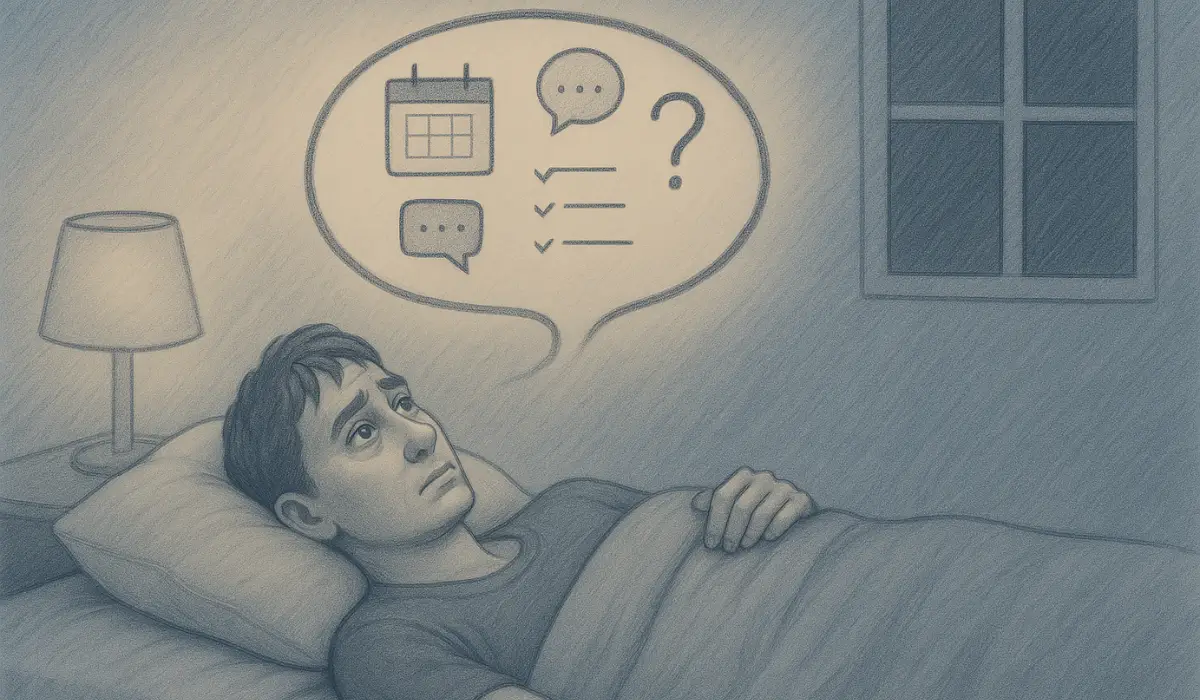
Nighttime Anxiety often appears when the body feels spent, yet the mind stays alert. You lie down tired, eyes heavy, breathing slower, but thoughts keep moving. Rest feels close, though unreachable.
Many people describe the experience as being physically drained while mentally wide awake. Bedtime quiet removes distractions, allowing worry and anticipation to surface.
One of the most common struggles involves racing thoughts at night, when the mind replays conversations, plans ahead, or scans for what might go wrong. The harder sleep is chased, the more tension builds.
Support centered on nervous system regulation, such as the care offered through Geauga Mind Body Hypnosis, focuses on helping the brain release its grip rather than forcing rest.
What Is Sleep Anxiety (And Why It Peaks at Night)?
Nighttime anxiety reflects a mismatch between physical fatigue and nervous system alertness. As external stimulation fades, internal monitoring increases. The brain shifts into review mode, scanning memories, obligations, and imagined outcomes.
Physiology plays a key role. The stress response system relies on cortisol and adrenaline to maintain vigilance. Research published by the National Institutes of Health shows elevated evening cortisol delays melatonin release, directly interfering with sleep initiation. Over time, bedtime becomes linked with arousal rather than calm.
Programs such as Transformational Hypnosis focus on interrupting this feedback loop by reshaping subconscious associations tied to rest, safety, and nighttime routines.
A common cycle develops:
- Anticipatory worry increases alertness
- Alertness delays sleep onset
- Sleep loss heightens emotional sensitivity
- Heightened sensitivity intensifies nighttime worry
Breaking this cycle requires retraining how the brain responds when the lights go out.
Common Thought Loops That Keep You Awake
Cognitive patterns tend to repeat with remarkable consistency during late hours. Many individuals recognize familiar scripts playing automatically
- unfinished tasks replaying
- imagined conversations revisited
- future responsibilities magnified
Without tools that encourage subconscious calming, these loops continue unchecked. The subconscious mind processes imagined outcomes similarly to real events, triggering physiological responses even in safe environments.
Electroencephalogram studies show heightened beta brainwave activity during anxious rumination. Beta dominance supports problem-solving, yet works against sleep onset, which relies on slower alpha and theta states.
How Hypnosis Helps Reset the Sleep Cycle?
Hypnosis introduces a focused state where attention narrows and the nervous system shifts out of hypervigilance. Sessions addressing hypnosis for sleep anxiety guide the brain toward patterns associated with rest rather than threat monitoring.
Through relaxation techniques and mental imagery, bedtime associations gradually change. The brain learns to interpret evening routines as safe, predictable, and restorative.
Sleep hypnotherapy also reduces autonomic nervous system activation. Heart rate variability improves, breathing slows, and muscle tension decreases, creating internal conditions that support sleep naturally.
Long-term benefits reported in clinical settings include:
- reduced sleep onset latency
- fewer nighttime awakenings
- improved morning alertness
Is Hypnosis Effective for Chronic Insomnia?
Clinical research supports hypnosis as a viable intervention. Stanford University researchers analyzing multiple trials observed meaningful improvements in sleep duration and depth among participants using hypnosis for insomnia.
National Institutes of Health publications describe hypnotic interventions influencing slow-wave sleep, the stage responsible for physical restoration and memory consolidation. Participants demonstrated reduced nighttime arousal and improved sleep efficiency over sustained periods.
Outcomes proved strongest when hypnosis targeted both mental patterns and physiological relaxation rather than surface-level habits alone.
What to Expect During a Sleep-Focused Hypnosis Session?
Sessions rooted in clinical hypnotherapy emphasize safety, control, and comfort. Awareness remains present throughout the experience. The process involves guided focus rather than unconsciousness.
Core elements typically include:
- breath pacing to regulate arousal
- imagery supporting mental quiet
- suggestion reframing bedtime expectations
Approaches influenced by holistic healing Hypnotherapy also addresses emotional load, lifestyle rhythms, and long-standing stress responses that influence sleep quality.
Sessions reflect the clinical background and trauma-informed approach used by the team at Geauga Mind Body Hypnosis. Care is overseen by practitioners with certifications in clinical hypnotherapy, NLP, and coaching, ensuring sessions remain structured, ethical, and responsive to individual nervous system patterns rather than scripted techniques.
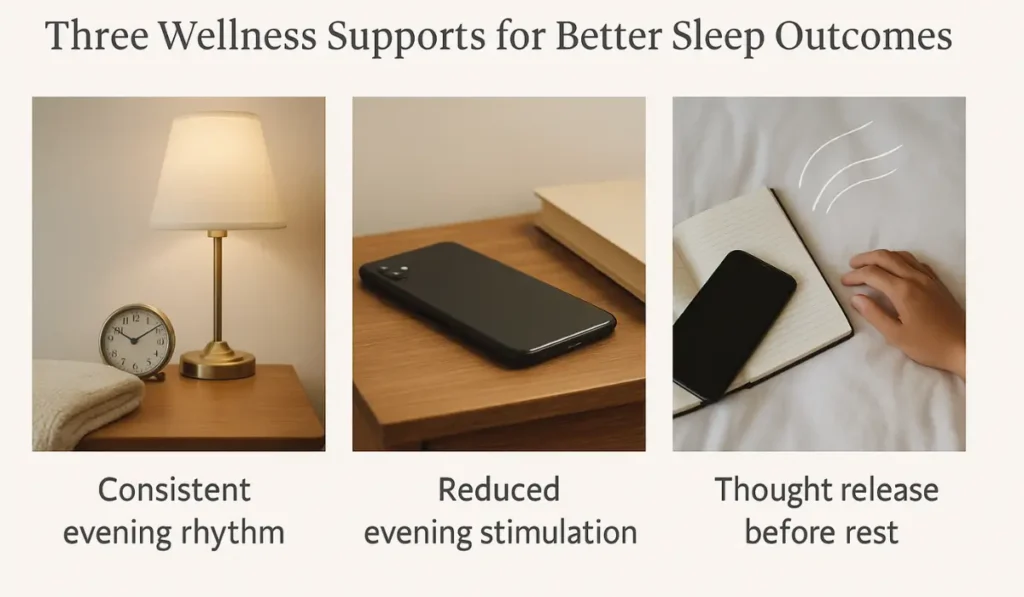
3 Practices That Strengthen Hypnosis Results
Nighttime Anxiety responds best to consistent cues signaling safety and closure
- repeating the same evening routine conditions predictability
- reducing light exposure supports melatonin release
- externalizing thoughts through writing lowers cognitive load
Access continued guidance through Transformational Hypnosis services and deeper conversations on the podcast.
Questions People Ask About Hypnosis and Sleep Challenges
Can hypnosis calm nighttime anxiety that disrupts sleep?
Yes. Hypnosis supports nervous system regulation by reducing mental hyperarousal and retraining bedtime associations. Research connected to Stanford and NIH publications highlights improvements in sleep depth and onset.
Does hypnosis help when thoughts race during bedtime?
Hypnosis works by narrowing focus and quieting mental noise. The process reduces repetitive thought loops by encouraging slower brainwave activity associated with rest.
Is sleep hypnosis safe for ongoing sleep problems?
Sleep-focused hypnosis is non-invasive and does not involve medication. Sessions maintain awareness and emphasize safety, comfort, and client control.
How many sessions are typically needed?
Some individuals notice improvement right away, while others benefit through the repeated reinforcement of a subconscious reprogramming audio. Results depend on stress levels, personal history, and consistency.
You Deserve Rest—And You Can Train Your Brain to Get It
Nighttime anxiety reflects a nervous system protecting too intensely, not a personal failure. With proper guidance, the brain relearns how to disengage once safety is restored. Clients working with holistic healing hypnotherapy frequently report calmer evenings, steadier sleep rhythms, and improved emotional regulation during the day. Relief often develops gradually, reinforcing confidence in the process.
| Book a Sleep-Focused Hypnosis Consult and allow rest to become a learned response again. You don’t have to fight racing thoughts alone. If sleep anxiety is stealing your nights, explore our sleep-focused hypnotherapy sessions, or contact us for a personalized consultation. |
| This article was reviewed by Tiffani Cappello, CHt, NLP, CLC—a certified clinical hypnotherapist and mindset coach. With advanced training in subconscious reprogramming, anxiety recovery, and confidence-building, Tiffani ensures accuracy and clarity throughout. ➤ Meet our certified team to see how hypnotherapy encourages lasting calm and confidence. |
