
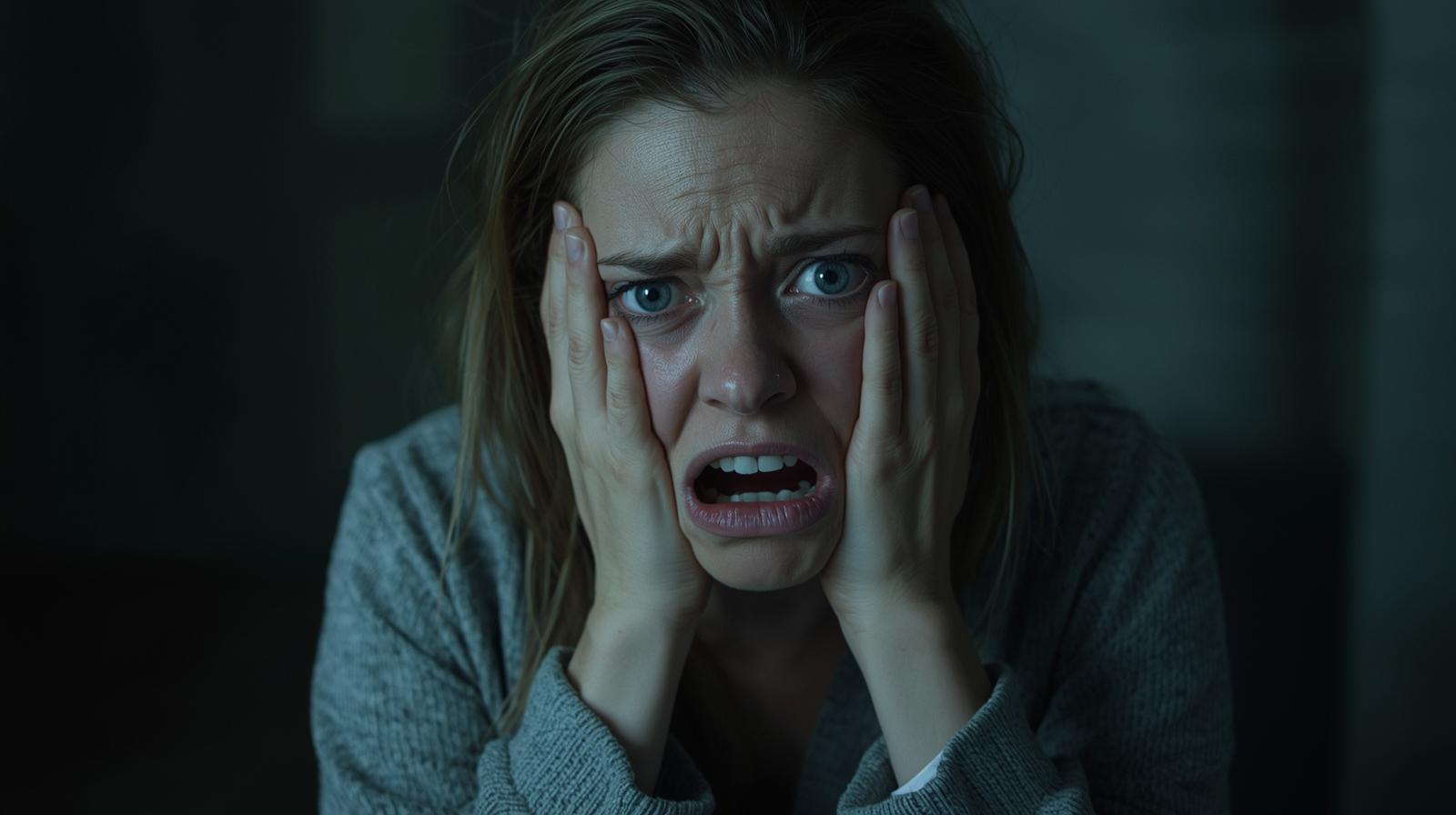
If you are asking “Why do panic attacks feel so real and physical?” you are likely struggling with a fear that goes beyond anxiety. Panic attacks do not feel like thoughts. They do not feel emotional. They feel like something is happening to your body. For many people, this is the most terrifying part of panic. The sensations feel undeniable, intense, and impossible to ignore.
I want you to know right away that I understand this experience on a deep level. I lived with severe panic disorder myself. I know what it is like to feel your body flood with sensations so strong that no amount of reassurance seems believable. I know what it is like to think, This can’t just be anxiety. This feels too real. That lived experience, combined with my medical background in physical therapy and my extensive training in Transformational Hypnosis, is what led me to develop the Panic2Calm™ method.
Panic2Calm™ exists because panic attacks feel overwhelmingly physical, and because those physical sensations are created by a nervous system pattern that can be changed.
Why panic attacks do not feel psychological
One of the biggest misunderstandings about panic attacks is the idea that they are “just in your head.” This belief often leaves people feeling dismissed, invalidated, or ashamed. Panic attacks are not imagined. They are not exaggerated. They are not signs of weakness.
Panic attacks are physiological events.
When panic occurs, the nervous system activates survival circuitry designed to protect you from danger. This activation creates real, measurable changes in the body. Heart rate increases. Breathing patterns shift. Muscles tighten. Blood flow changes. Sensory awareness sharpens. Digestion slows.
These changes are not subtle. They are meant to prepare the body for action. That is why panic attacks feel so real.
The role of adrenaline in physical panic symptoms
Adrenaline plays a central role in panic attacks. When the nervous system believes there is danger, adrenaline is released to help you respond quickly. Adrenaline affects nearly every system in the body.
It can cause:
• Shortness of breath or air hunger
• Dizziness or lightheadedness
• Shaking or trembling
• Tingling or numbness
• Heat or chills
• Nausea or stomach discomfort
These sensations are intense because adrenaline is powerful. The body is not malfunctioning. It is responding exactly as it would in a true emergency.
Why the body reacts before the mind can intervene
One of the most frustrating aspects of panic is how quickly it escalates. By the time you realize what is happening, your body already feels out of control. This happens because the nervous system reacts faster than conscious thought.
The part of the brain responsible for survival responses operates automatically. It does not wait for logic or reasoning. When it believes there is danger, it acts immediately.
This is why telling yourself to calm down often does not work. Panic is not a conscious choice. It is an automatic reaction.
Why physical sensations become the focus of fear
Once panic has occurred, many people become hyperaware of their body. They begin monitoring their heart, breathing, and physical state closely. This attention is understandable, but it can unintentionally keep panic alive.
When the brain is focused on bodily sensations, it interprets normal fluctuations as potential threats. A normal heartbeat feels too fast. A normal breath feels too shallow. A normal sensation feels alarming.
This interpretation reinforces fear, which increases adrenaline, which intensifies the sensations.
The cycle continues.
Why panic attacks feel different from normal stress
Stress and panic are not the same. Stress builds gradually and often feels manageable. Panic is sudden and overwhelming.
The difference lies in how the nervous system interprets the situation. Stress activates the nervous system in a controlled way. Panic activates it as if there is immediate danger.
This is why panic attacks feel so disproportionate to what is happening around you. The body is reacting to perceived danger, not actual circumstances.
Why physical panic symptoms vary from person to person
Not everyone experiences panic attacks the same way. Some people feel intense chest symptoms. Others feel dizziness or gastrointestinal distress. Some feel overwhelming fear. Others feel disconnected or unreal.
This does not mean one experience is more serious than another. It simply reflects how different nervous systems express the same survival response.
What all panic attacks have in common is this: the sensations are driven by fear of the sensations themselves.
Why the fear of physical sensations keeps panic going
After experiencing intense physical panic symptoms, many people become afraid of their own body. They worry about what the sensations mean and whether they indicate something dangerous.
This fear creates a feedback loop. The nervous system becomes more sensitive. Sensations become more noticeable. Fear increases. Panic becomes more likely.
This does not mean you are causing panic. It means the nervous system has learned to associate physical sensations with danger.
Why panic does not damage the body
One of the most common fears people develop is that repeated panic attacks will harm their body. They worry about their heart, brain, or nervous system.
Panic attacks do not damage the body. The nervous system is designed to activate and deactivate. The problem with panic is not damage. It is repetition driven by fear.
When fear is removed, the nervous system returns to baseline naturally.
How Panic2Calm™ addresses the physical reality of panic
Panic2Calm™ was developed specifically to address the physical nature of panic attacks. It is an educational process that helps clients understand what their body is doing and why those sensations feel so intense.
When people truly understand that their symptoms are stress responses rather than danger signals, the fear begins to soften. The body no longer needs to stay on high alert.
The method also includes a subconscious reprogramming element, because panic is maintained at an automatic level. When those automatic fear responses change, the physical symptoms lose their power.
Why understanding changes the body’s response
The nervous system responds to meaning. When sensations are interpreted as dangerous, the alarm stays on. When sensations are understood as safe, the alarm shuts off.
This shift does not require effort. It requires the right understanding at the subconscious level.
This is why many clients experience significant relief in as little as one hour. The body responds immediately when it no longer believes it is in danger.
Rebuilding trust in your body
One of the hardest parts of panic is losing trust in your own body. It can feel like your body is unpredictable or unsafe.
Panic2Calm™ focuses on restoring that trust. When the fear loop is broken, the body returns to its natural state of balance. Physical sensations no longer feel threatening. Calm becomes familiar again.
A compassionate reminder
If panic attacks have made you afraid of your own body, please know this. Your body is not broken. It is not betraying you. It is responding to learned fear.
I know how frightening it is to live inside a body that feels out of control. I also know that panic does not have to remain part of your life. When understanding replaces fear, the nervous system no longer needs to create these intense physical experiences. Schedule your free consult to learn more.
